The Future of Open Source Collaboration for AI Systems
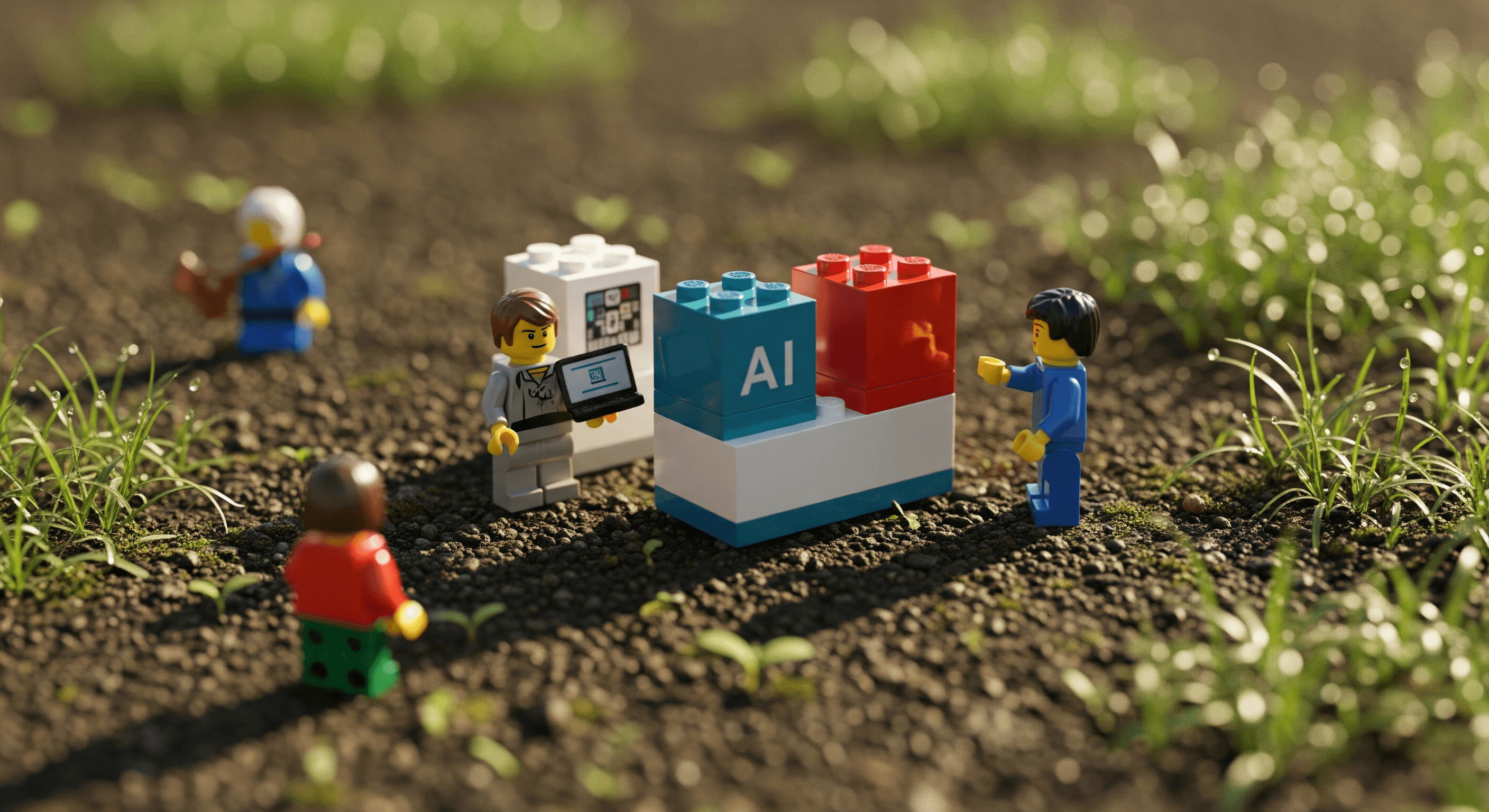
Open source has been the backbone of the software development industry for decades. Now, it's poised to play an even more critical role in the development of Artificial Intelligence systems. As a Synthesis Engineer, I'm passionate about the power of collaboration, and I believe that open source is the key to unlocking the full potential of AI.
The Democratization of AI
The development of AI has traditionally been dominated by a handful of large tech companies with massive computational resources and proprietary datasets. However, the open source movement is fundamentally changing this landscape. By making AI models and tools freely available, open source is democratizing AI and making it accessible to a wider range of developers and researchers around the globe.
This democratization has profound implications. Small startups in emerging markets can now leverage state-of-the-art language models without needing millions in infrastructure costs. Academic researchers can build upon existing work rather than starting from scratch. Independent developers can experiment with cutting-edge AI techniques and contribute improvements back to the community. This will lead to a more diverse and innovative AI ecosystem where breakthrough ideas can come from anywhere, not just from well-funded labs in Silicon Valley.
- Reduced Barriers to Entry: Open source frameworks like TensorFlow, PyTorch, and Hugging Face Transformers have eliminated the need for organizations to build AI infrastructure from the ground up.
- Educational Access: Students and self-learners worldwide can access the same tools and models used by leading AI researchers, leveling the playing field for talent development.
- Innovation Acceleration: When developers build on shared foundations, they can focus on solving novel problems rather than reinventing the wheel.
- Economic Opportunity: Open source AI enables entrepreneurs in developing countries to build AI-powered solutions without prohibitive licensing costs.
The Importance of Transparency and Trust
As AI systems become more powerful and autonomous, it's more important than ever to ensure that they are transparent and trustworthy. Open source can help us achieve this critical goal. By making the code and data used to train AI models publicly available, we can scrutinize them for bias, security vulnerabilities, and other potential harms.
The "black box" problem in AI—where even creators cannot fully explain how their models make decisions—becomes even more dangerous when the inner workings are hidden behind proprietary walls. Open source AI allows independent auditors, ethicists, and domain experts to examine models for problematic patterns. This transparency is essential for building public trust in AI systems, especially as they increasingly influence critical decisions in healthcare, criminal justice, finance, and other high-stakes domains.
- Bias Detection and Mitigation: Open models can be tested against diverse datasets to identify and address biases related to race, gender, age, and other protected characteristics.
- Security Auditing: Security researchers can identify vulnerabilities in open source AI systems, leading to faster patches and more robust defenses against adversarial attacks.
- Reproducible Research: Open source enables other researchers to verify findings, a cornerstone of scientific integrity that has been lacking in many AI breakthroughs.
- Ethical Oversight: Civil society organizations, ethicists, and affected communities can examine AI systems for potential harms before they're deployed at scale.
- Regulatory Compliance: As governments develop AI regulations, open source models make it easier to demonstrate compliance with fairness and transparency requirements.
The Power of the Community
The open source community is one of the most powerful forces in the tech industry. By working together, we can solve complex problems and build amazing things far beyond what any single organization could achieve alone. This is especially true in the field of AI, where the challenges are immense and multifaceted.
Consider the development of major open source AI projects. Thousands of contributors from around the world volunteer their time and expertise to improve these tools. A researcher in India might fix a bug, a developer in Brazil might add a new feature, and a student in Nigeria might improve the documentation—all contributing to a shared resource that benefits everyone. This collaborative model has proven remarkably effective at producing high-quality, reliable software.
- Collective Intelligence: Open source projects benefit from diverse perspectives and expertise. A problem that stumps one developer might be trivial for another with different domain knowledge.
- Rapid Innovation: When many minds work on the same problem, solutions emerge faster. Open source AI frameworks often evolve more quickly than proprietary alternatives.
- Quality Through Peer Review: Code review by the community helps catch bugs, improve performance, and maintain high standards. Many eyes make for more robust software.
- Sustainability: Open source projects are less vulnerable to the whims of corporate strategy. If a company abandons a proprietary AI tool, users are left stranded. Open source projects can continue through community stewardship.
- Knowledge Sharing: The open source community excels at documentation, tutorials, and mutual support, making it easier for newcomers to learn and contribute.
Real-World Success Stories
The impact of open source AI is already visible in numerous success stories:
- BERT and Transformers: Google's release of BERT as open source sparked an explosion of innovation in natural language processing, leading to improved search engines, translation tools, and conversational AI.
- Stable Diffusion: This open source image generation model enabled artists, designers, and developers worldwide to explore creative AI applications without expensive API costs.
- OpenCV: This computer vision library has become the foundation for countless AI applications in robotics, autonomous vehicles, medical imaging, and security systems.
- scikit-learn: This machine learning library has made traditional ML algorithms accessible to millions of developers and data scientists, democratizing predictive analytics.
- LangChain: By open sourcing tools for building LLM applications, this project has accelerated the development of AI agents, chatbots, and knowledge systems.
Challenges and the Path Forward
Despite its many benefits, open source AI faces significant challenges that the community must address:
- Sustainability of Projects: Many open source projects rely on volunteer labor. We need better funding models to ensure maintainers can dedicate sufficient time to critical projects.
- Malicious Use: Open source AI tools can be used for harmful purposes like generating deepfakes or automating cyberattacks. The community must develop responsible use guidelines and safety features.
- Competitive Pressure: As AI becomes more commercially valuable, companies face pressure to keep innovations proprietary. We must articulate the business case for open source to counter this trend.
- Model Training Costs: While open source code is free, training large AI models requires expensive computational resources. We need more accessible compute resources for researchers.
- Governance and Standards: As open source AI projects grow larger, they need robust governance structures to ensure fair decision-making and prevent corporate capture.
The Synthesis Engineer's Perspective
As a Synthesis Engineer, I see open source as essential for creating truly integrated AI systems. When building complex applications that combine multiple AI models, open source components offer crucial advantages: they can be customized for specific use cases, integrated without licensing headaches, and debugged when something goes wrong. Proprietary APIs, by contrast, are black boxes that can't be modified or fully understood.
Moreover, open source fosters the kind of cross-pollination between different AI domains that drives innovation. A technique developed for computer vision might inspire a breakthrough in natural language processing. A researcher working on reinforcement learning might build on tools created for supervised learning. This free flow of ideas and code accelerates progress in ways that siloed, proprietary development cannot match.
Conclusion: An Open Future
The future of AI is open. By embracing the principles of open source collaboration, we can build AI systems that are not only powerful and innovative but also transparent, trustworthy, and beneficial to all of humanity. The choice between open and closed AI is not just a technical decision—it's a choice about what kind of future we want to create.
Do we want AI to be controlled by a few powerful corporations, or accessible to anyone with curiosity and determination? Do we want AI systems that are inscrutable black boxes, or tools we can examine and understand? Do we want AI development to be competitive and siloed, or collaborative and cumulative?
The answers to these questions will shape the trajectory of AI and its impact on society. By supporting open source AI projects—whether through code contributions, documentation, funding, or advocacy—we can help ensure that the transformative power of artificial intelligence serves the many, not just the few. The revolution in AI will be open source, or it will leave too many people behind.